The edge ofthe continent
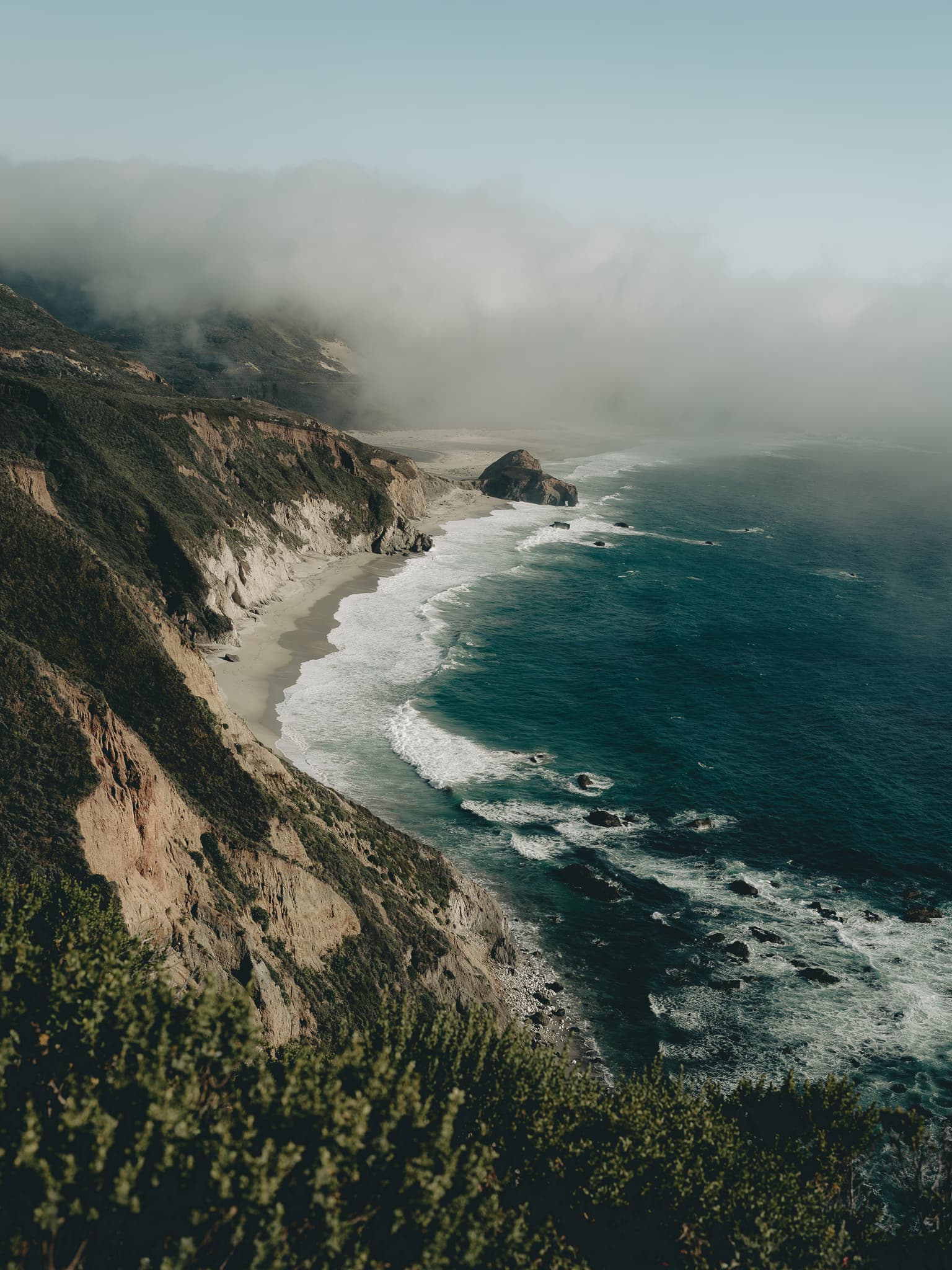
The Lost Coast is the most remote stretch of the California coastline — named for the roads that couldn’t follow it. Here the King Range drops two thousand feet directly into the Pacific, and the land holds a quality of wildness that has been mostly undisturbed for centuries.
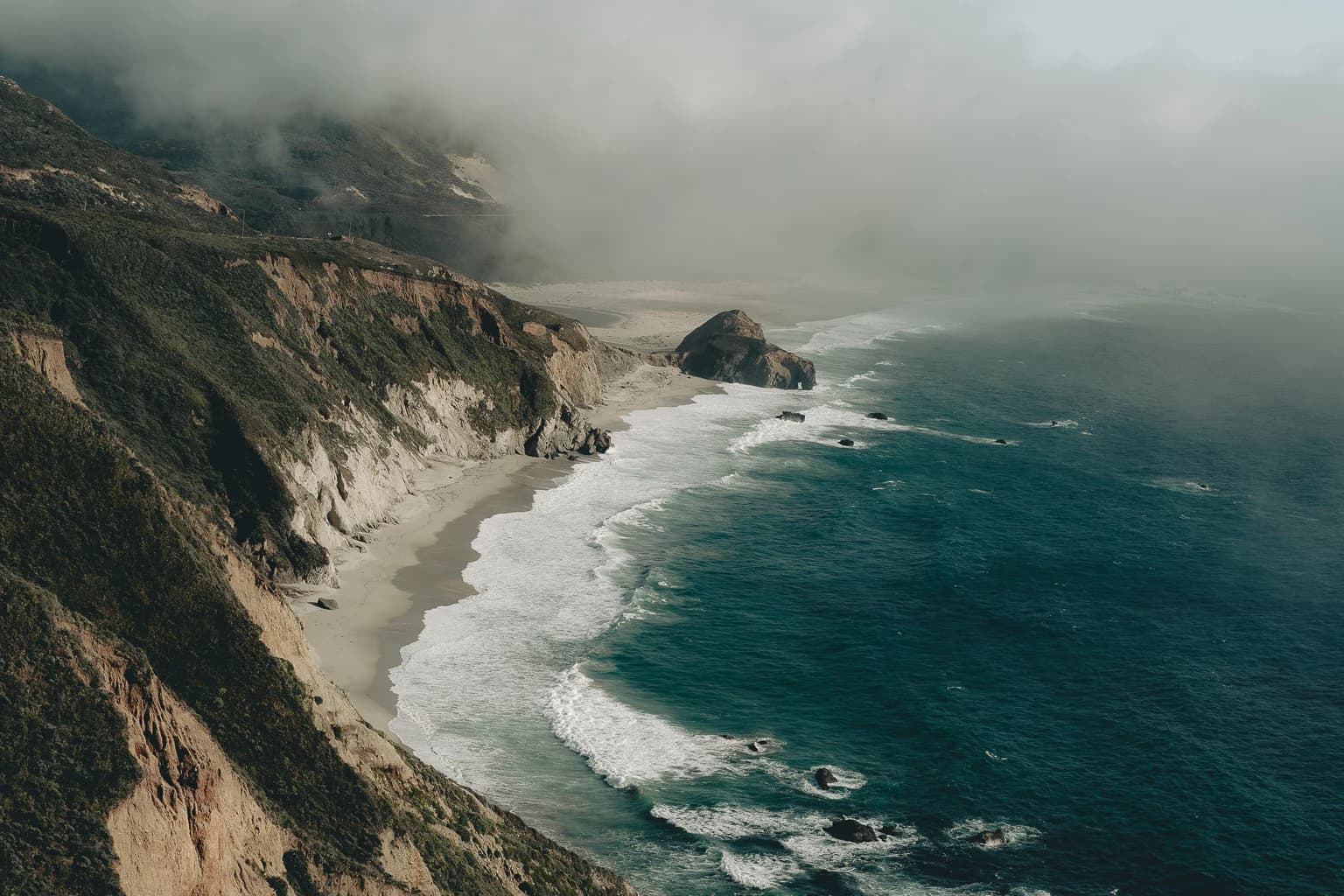
What registers first is the air: saline and cold, threaded with coastal scrub and the particular mineral quality of fog that has come a long way over open water. This is the landscape Lost Coast is made from — not as metaphor, but as material.
The composition
Lost Coast is shaped by Northern California’s most remote shore: the end of everywhere and the edge of nowhere. Orange and cedrat open with clarity before green fig leaf and myrtle move through the composition. Driftwood brings warmth. Sandalwood, vetiver, and California papyrus settle into a mineral drydown, recalling cold marine air moving inland.
First contact
The first thing you notice is brightness: citrus crushed under a marine sky. Orange and cedrat open the fragrance with a sharp, clean edge that reads like salt air and morning light on stone. An opening that doesn’t linger; it announces and dissolves.
The landscape
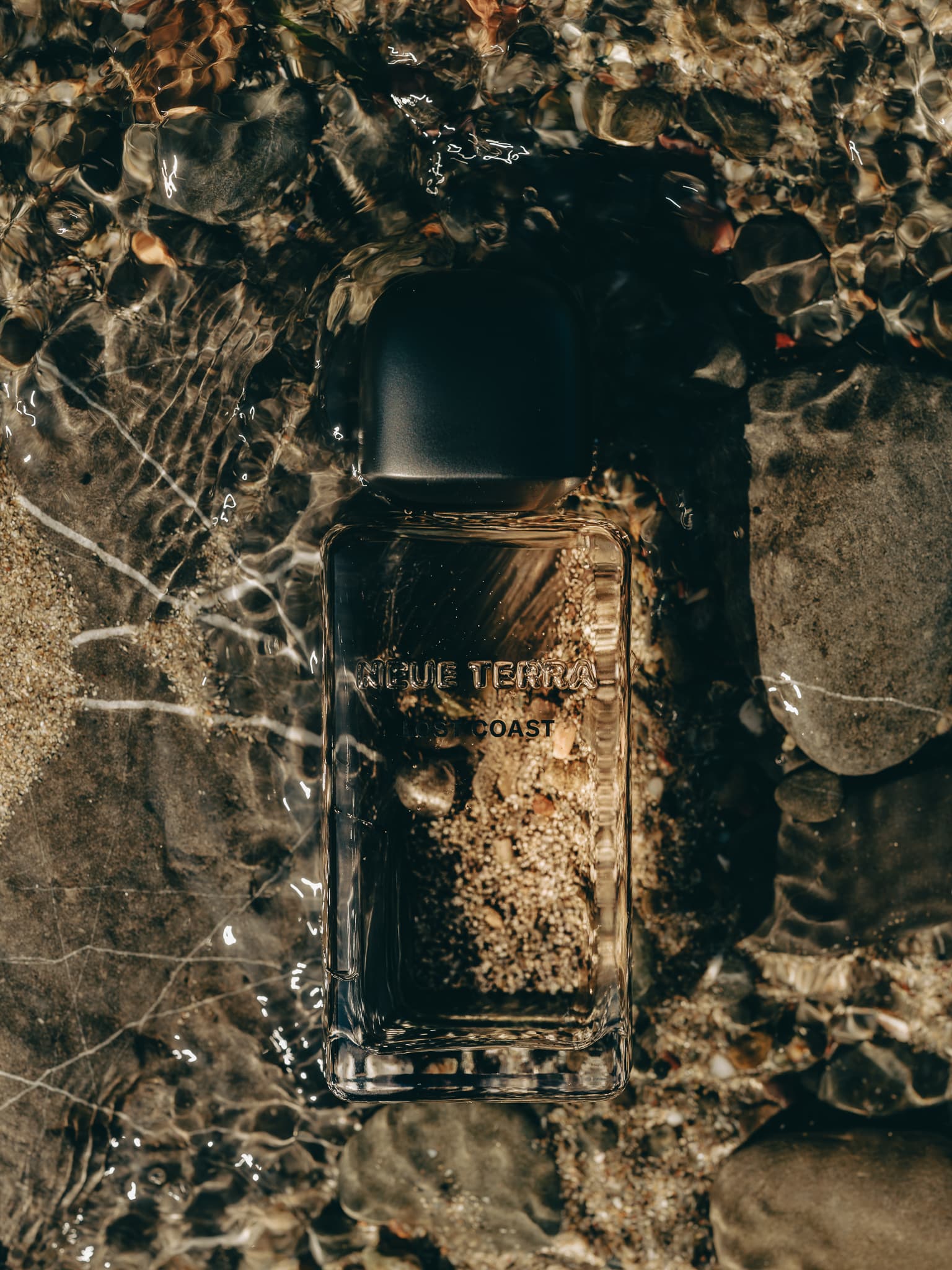
As the citrus lifts, the landscape comes into focus. Fig leaf, green, slightly milky, botanical, winds through coastal myrtle. The driftwood accord reads neither floral nor woody but something weathered: a branch bleached grey and smooth by years of tide.
What remains
Hours later, a warmth that feels like belonging. Sandalwood and vetiver settle deep, earthy, rooted, resinous, while California papyrus adds something specific to the Central Coast, a rustling, dry quality that keeps the fragrance tethered to the land.
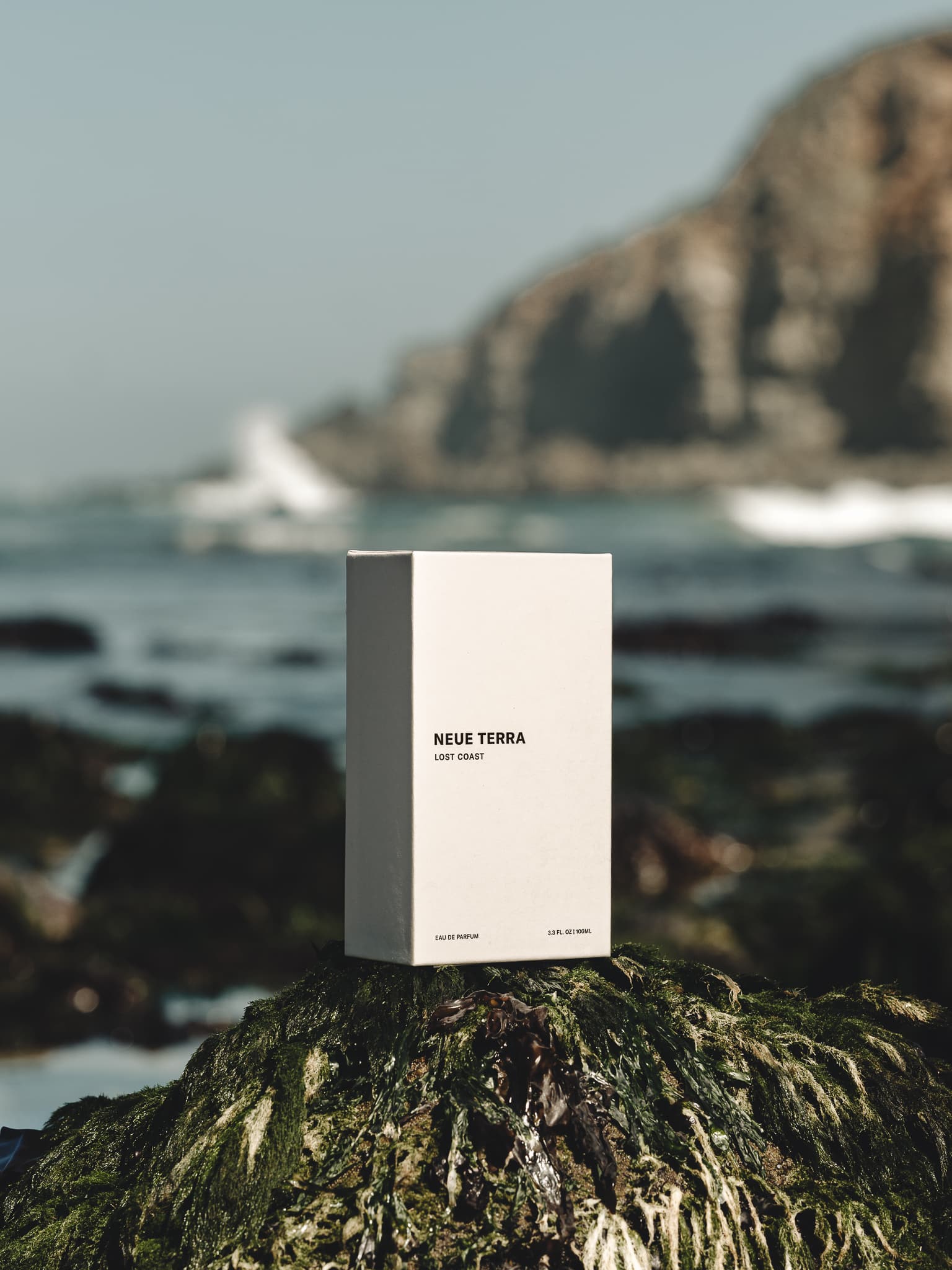
Lost Coast is part of the first Neue Terra collection, composed by Ashley Santiago and made in California.